The Ultimate Alphabet
Mike Wilks
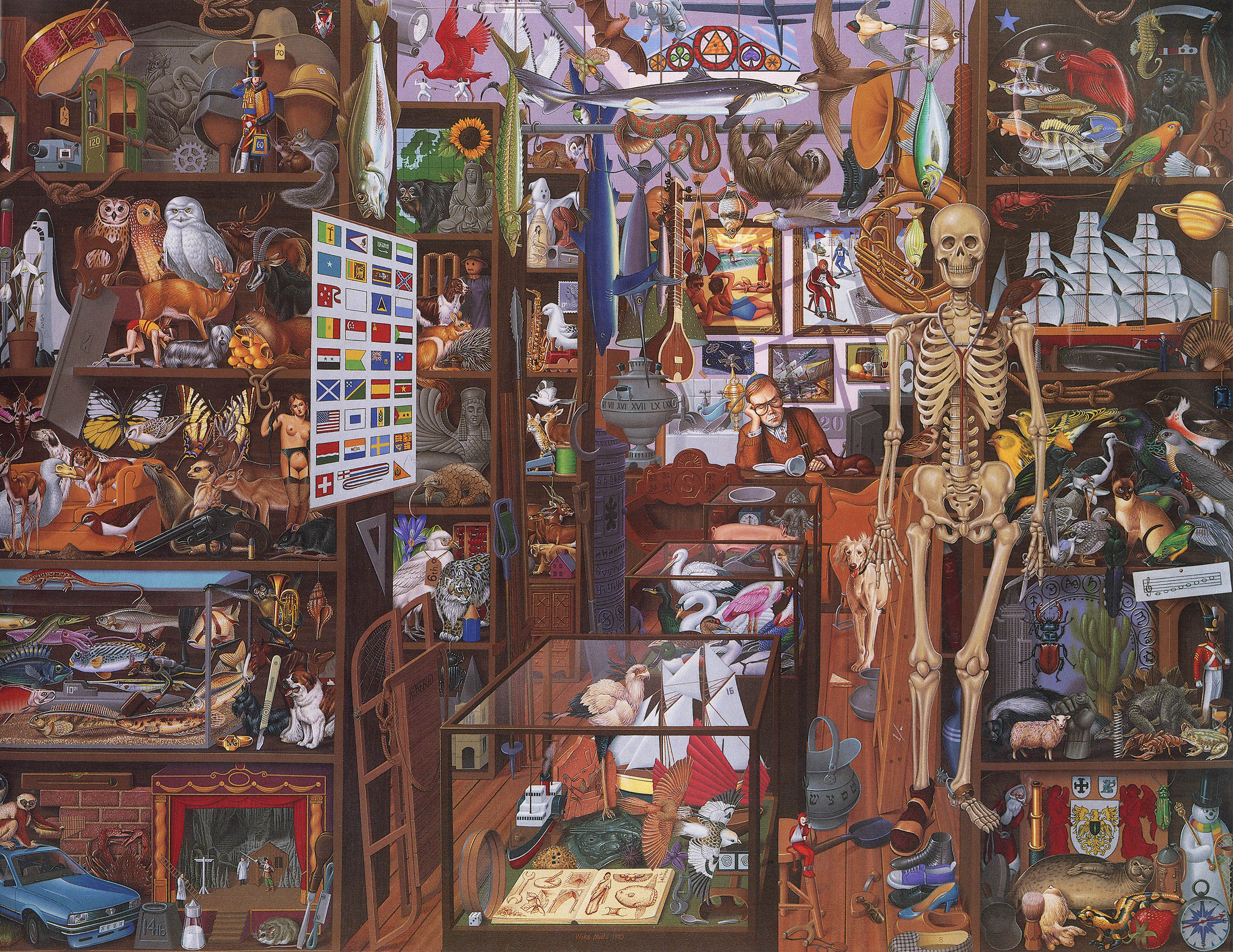
This is the majority of the letter S – the most complicated image from Mike Wilks’ The Ultimate Alphabet. In the 30 × 40" acrylic painting Wilks included 1234 nouns, verbs and adjectives that began with S. To suggest that the picture repays careful study is someting of an understatement.
Mike Wilks (b. 1947) began art school on scholarship at age 13 and after studying for seven years he began a career as a graphic designer, founding the London design agency TWD. In 1975 he sold TWD and began a second career illustrating books.
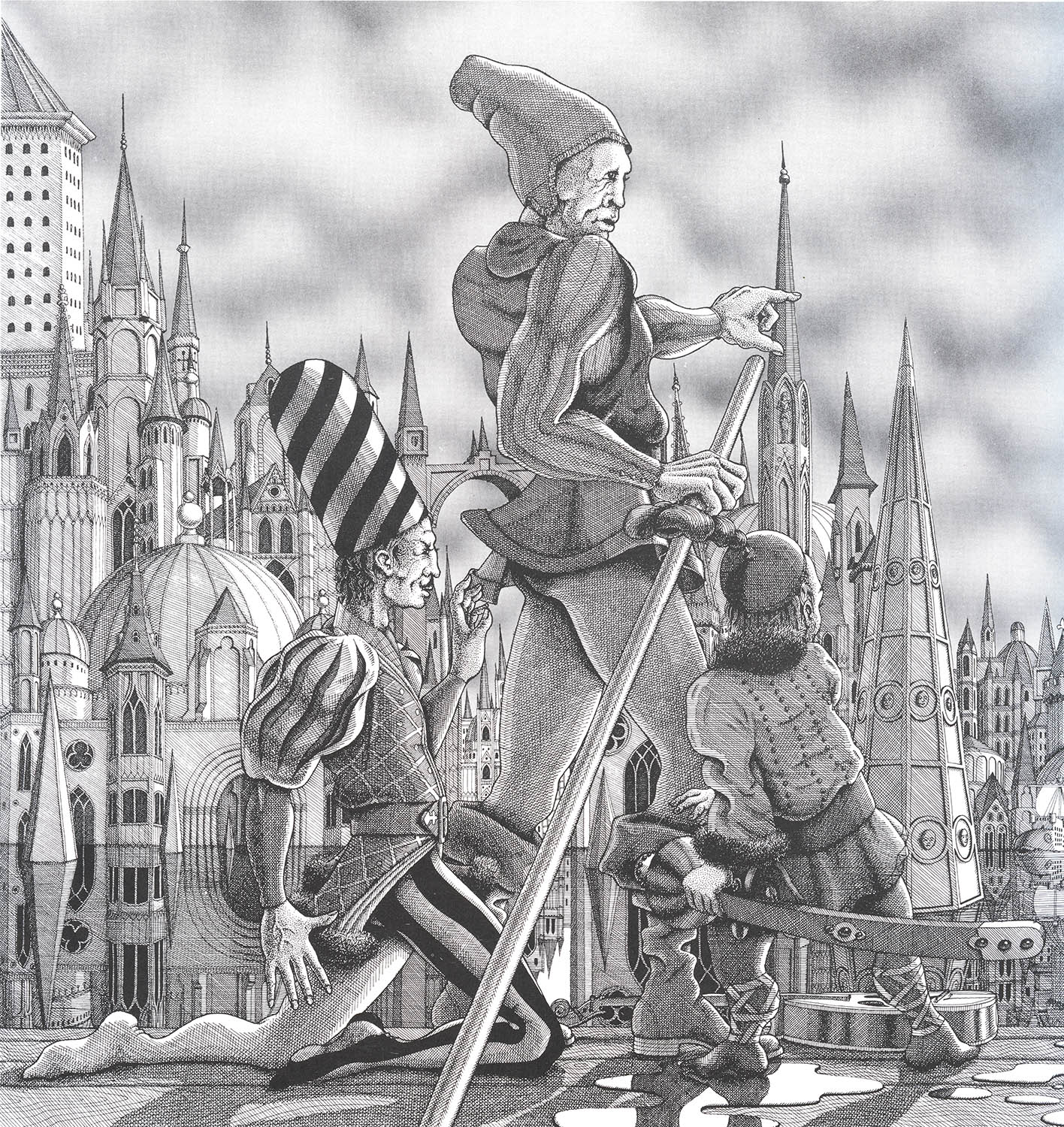
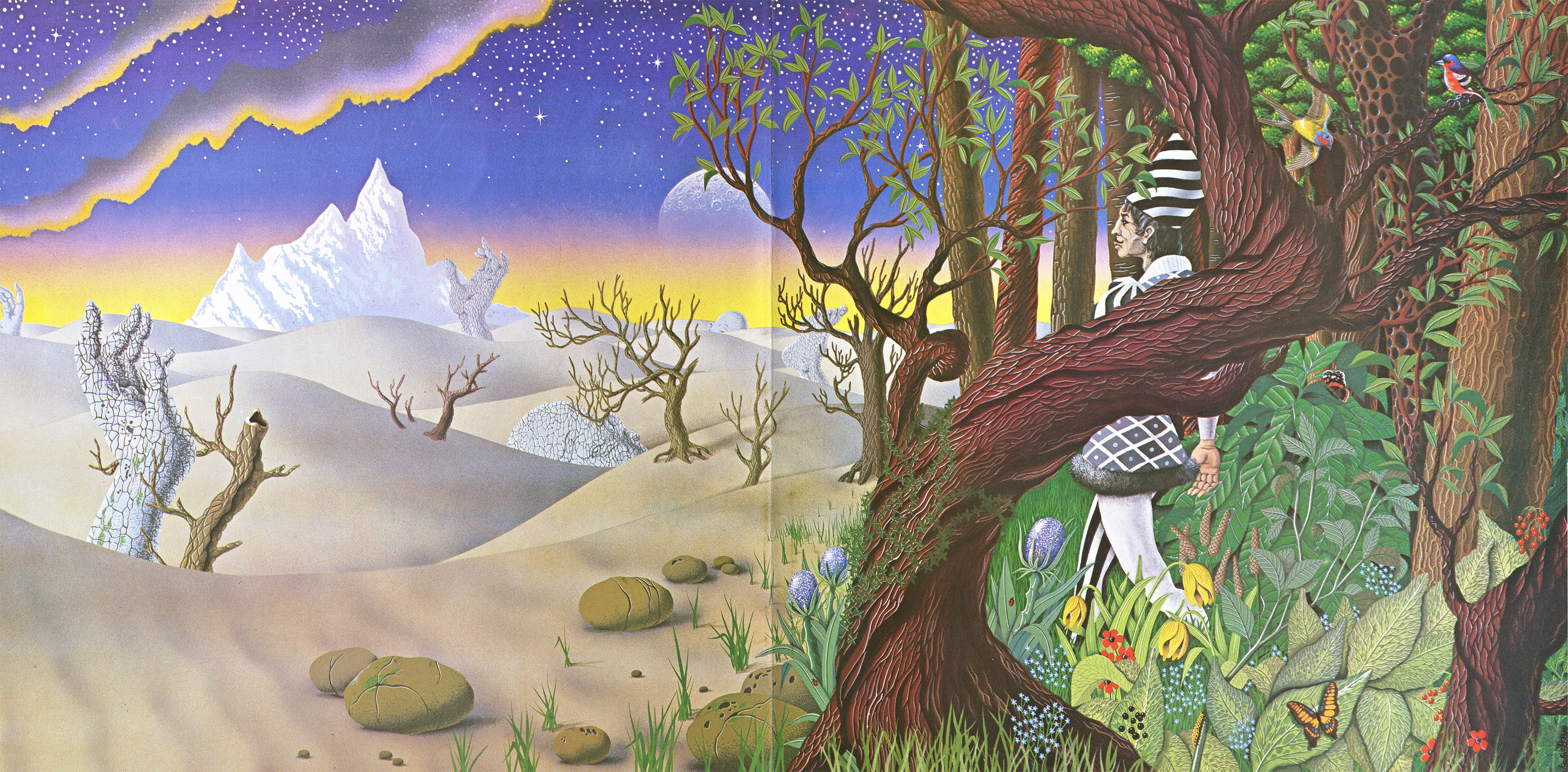
His first major commission was for Brian Aldiss’ epic poem Pile – Petals From Saint Klaed’s Computer, published in 1979.1 With a single exception, all of the 32 illustrations were done in pen and ink, which Wilks felt was his most accomplished medium. The intricate detail and the almost Bosch or Dali sense of surrealism are what made the book something of a cult classic and are characteristic of all of Wilks’ work:
On the heels of Britain’s armchair treasure hunt craze, spurred by Kit Williams wildly successful 1979 book Masquerade,2 Wilks approached his publisher with the idea of a puzzle book based around finding all of the words in a series of paintings for each letter of the alphabet – like a child’s ABC book "taken to ridiculous lengths." He spent four years consulting encyclopedias, specialist books and even an Australian dictionary to research and paint the 26 acrylic canvases and included 7777 words in his abecderium.
The Ultimate Alphabet was published in 1986 and the contest was to correctly identify all 7777 words from a 12,000-word workbook.3 The book became a surprise bestseller in both the UK and America, eventually selling more than 750,000 copies. The bookseller WHSmith even listed it as the “most shop-lifted title” of the year.
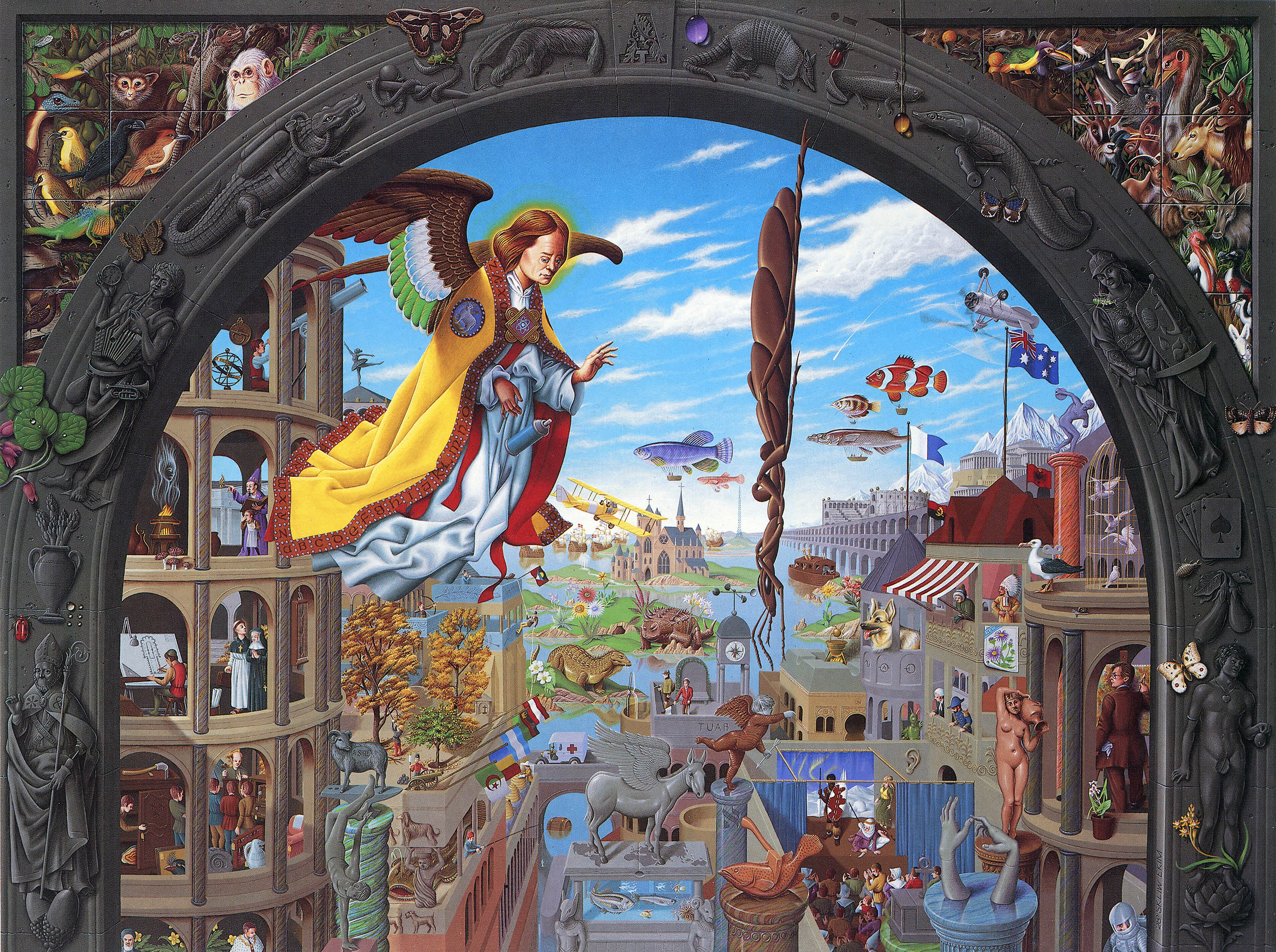
The letter A – 360 words
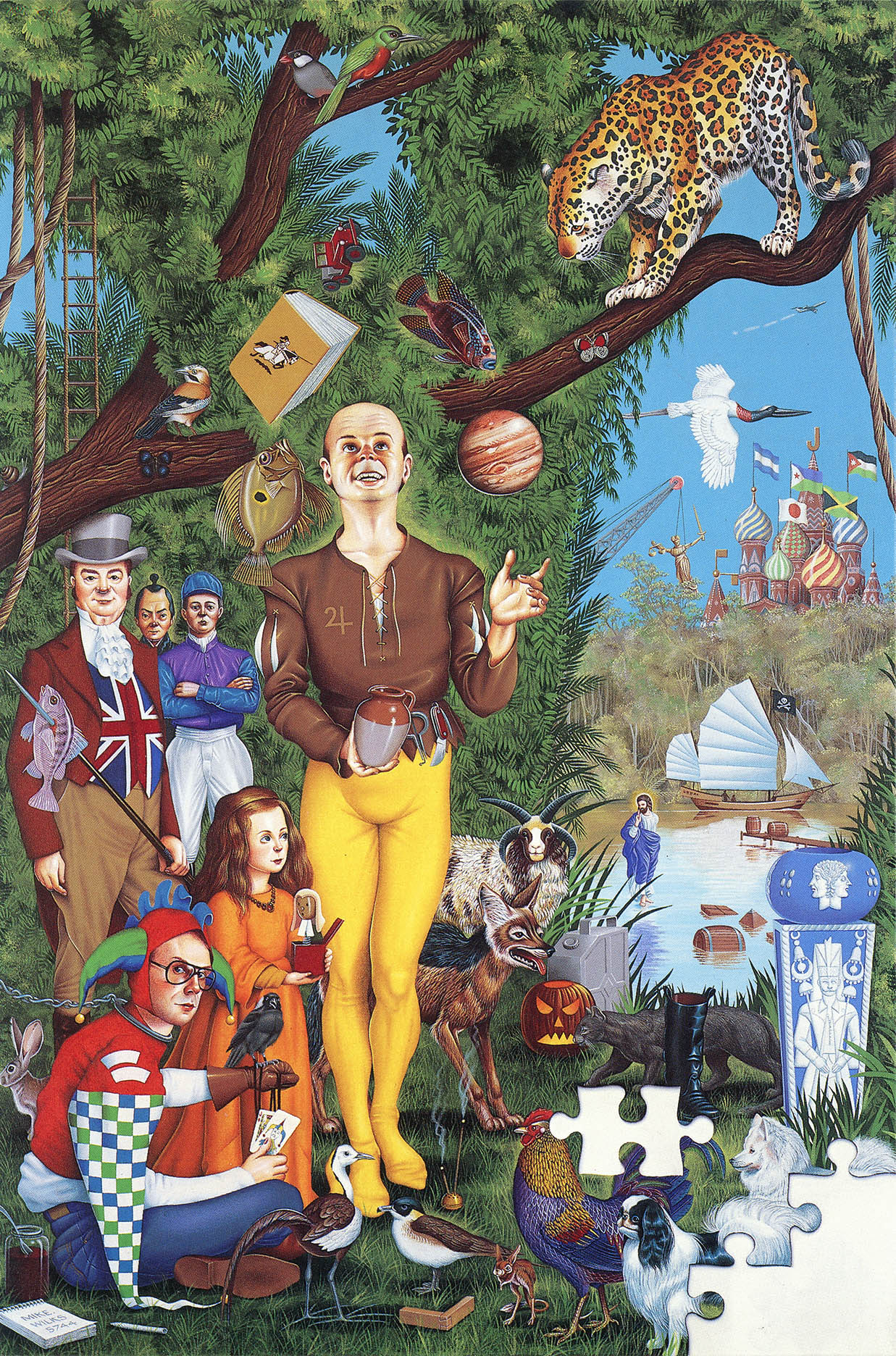
The letter J – 102 words
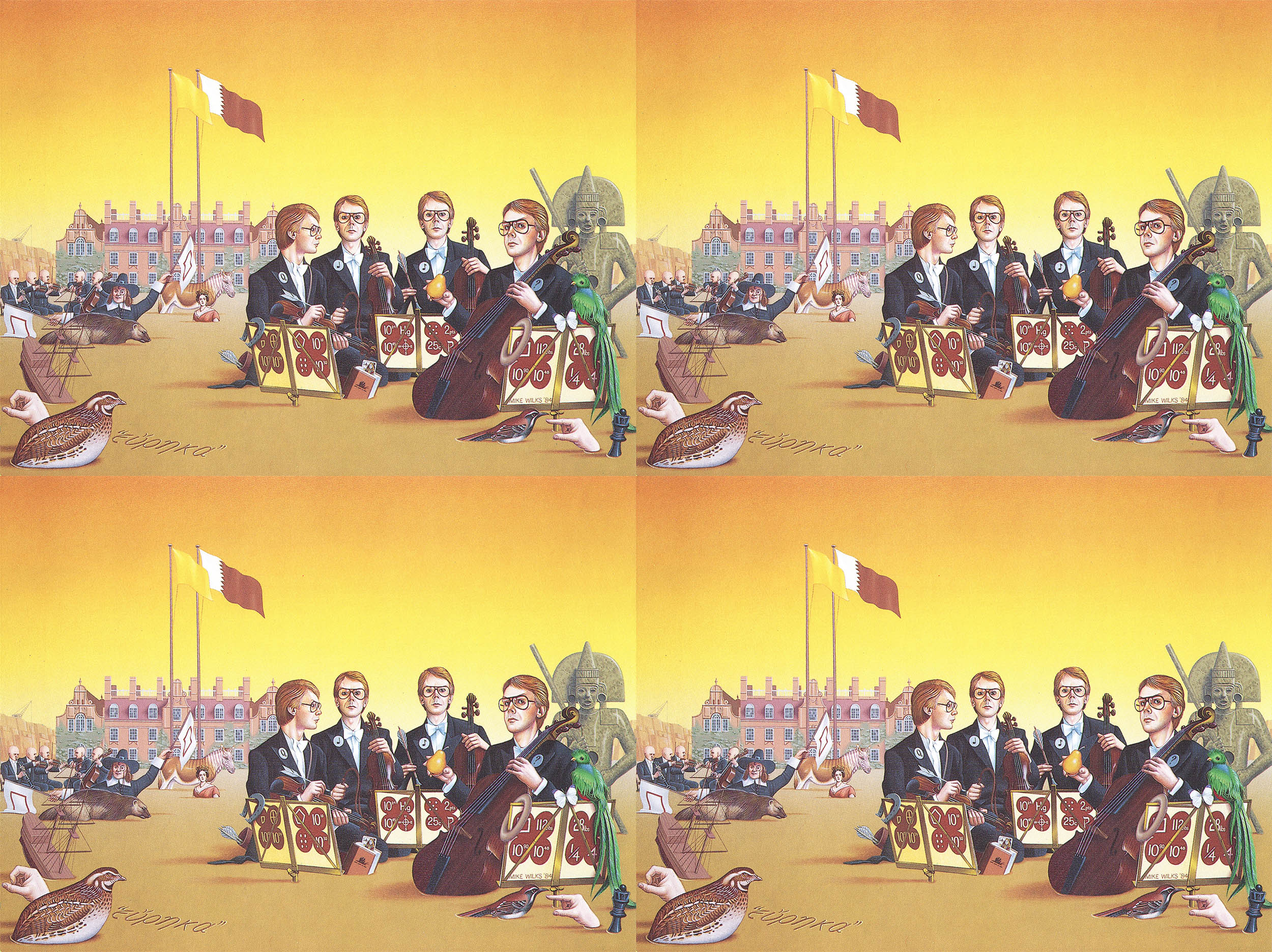
The letter Q – 309 words

The letter Y – 74 words
In 1988, after the contest was completed, Wilks published The Annotated Ultimate Alphabet, which included the key to the words:4
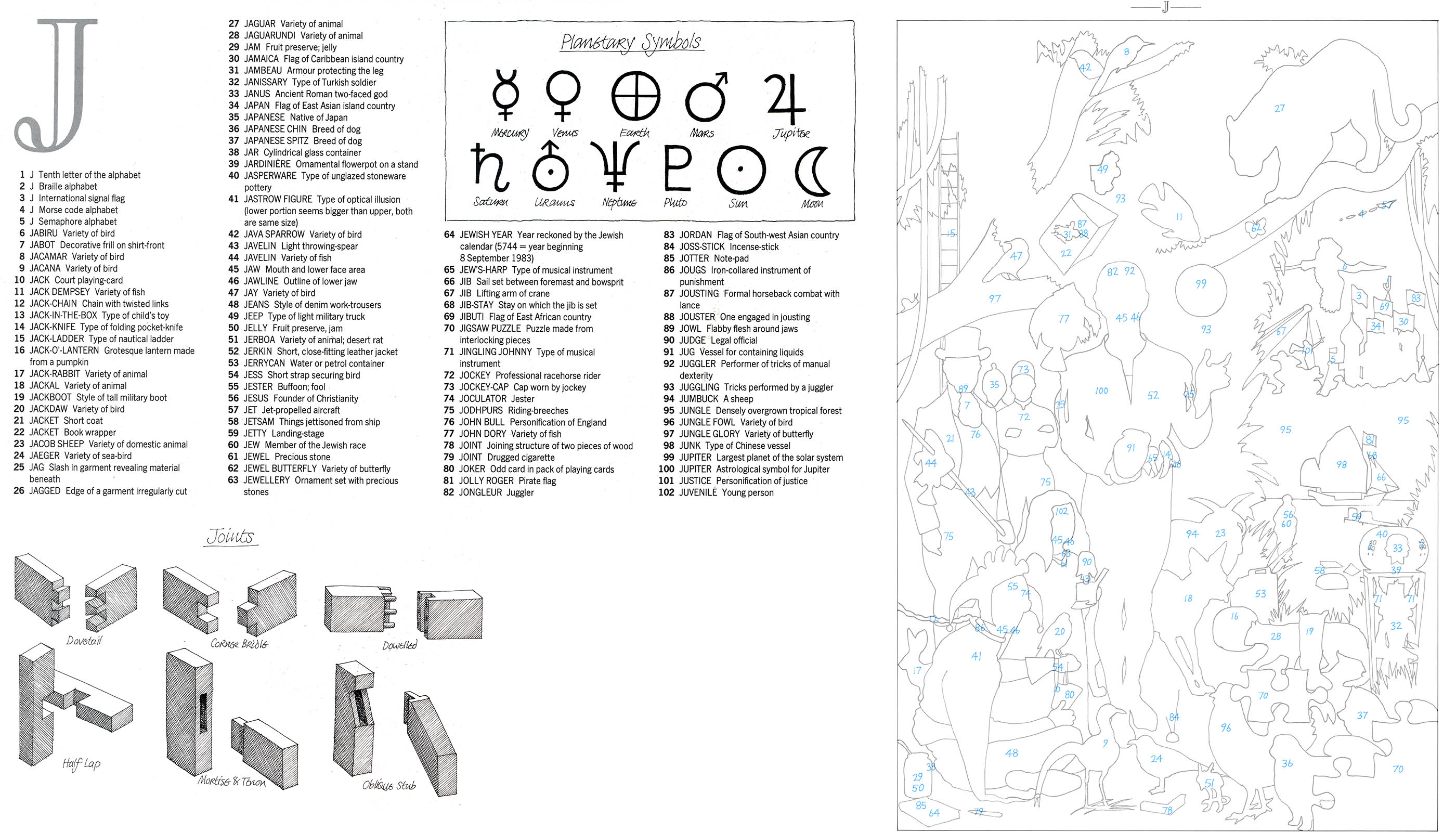
The letter J – 102 words
Astute readers identified many new words that Wilks did not consciously paint and in 1992 new editions of The Ultimate Alphabet and The Annotated Ultimate Alphabet were published, including a revised list of 8050 words.
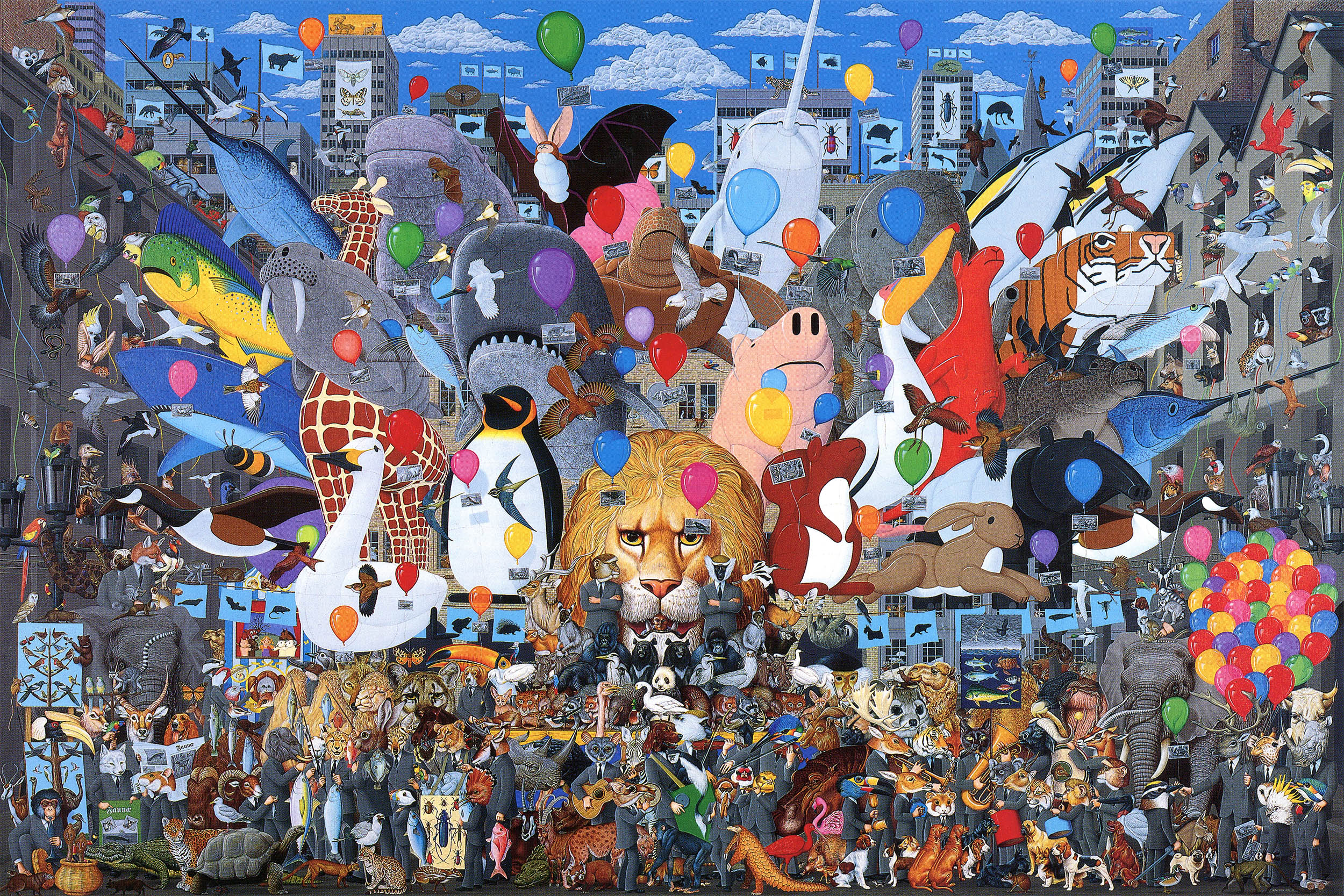
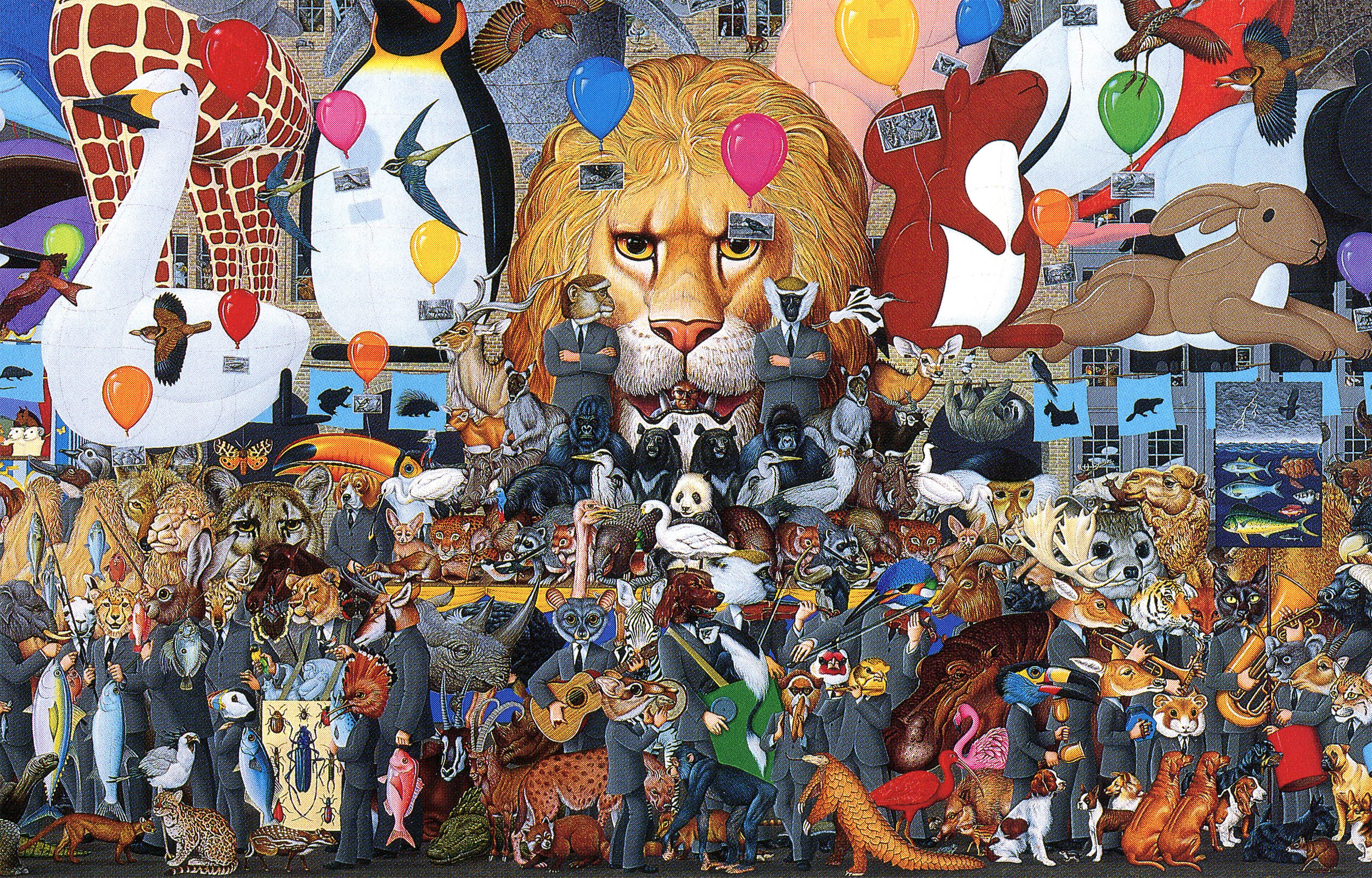
The 1995 Wilks published his second puzzle book, The Ultimate Noah’s Ark.5 For the book he painted a single large, monstrously complex acrylic canvas which included 707 animals – all paired except one.4 Perhaps learning their lesson from grading thousands of 47-page Ultimate Alphabet workbooks, the publisher's contest was to simply identify the lone animal whose mate was missing.
Wilk’s last book in his trilogy was The Ultimate Spot-the-Difference Book, published in 1997.6 It included 12 paintings representing the stages of life.5 Each page was printed twice and digitally manipulated to include changes – up to 75 on text pages and up to 250 on the images. The puzzle (a contest was held only by the UK publisher) was to identify these changes. Although much of the iconography and design themes are similar to Wilks earlier work, these images are even more surreal and dark:
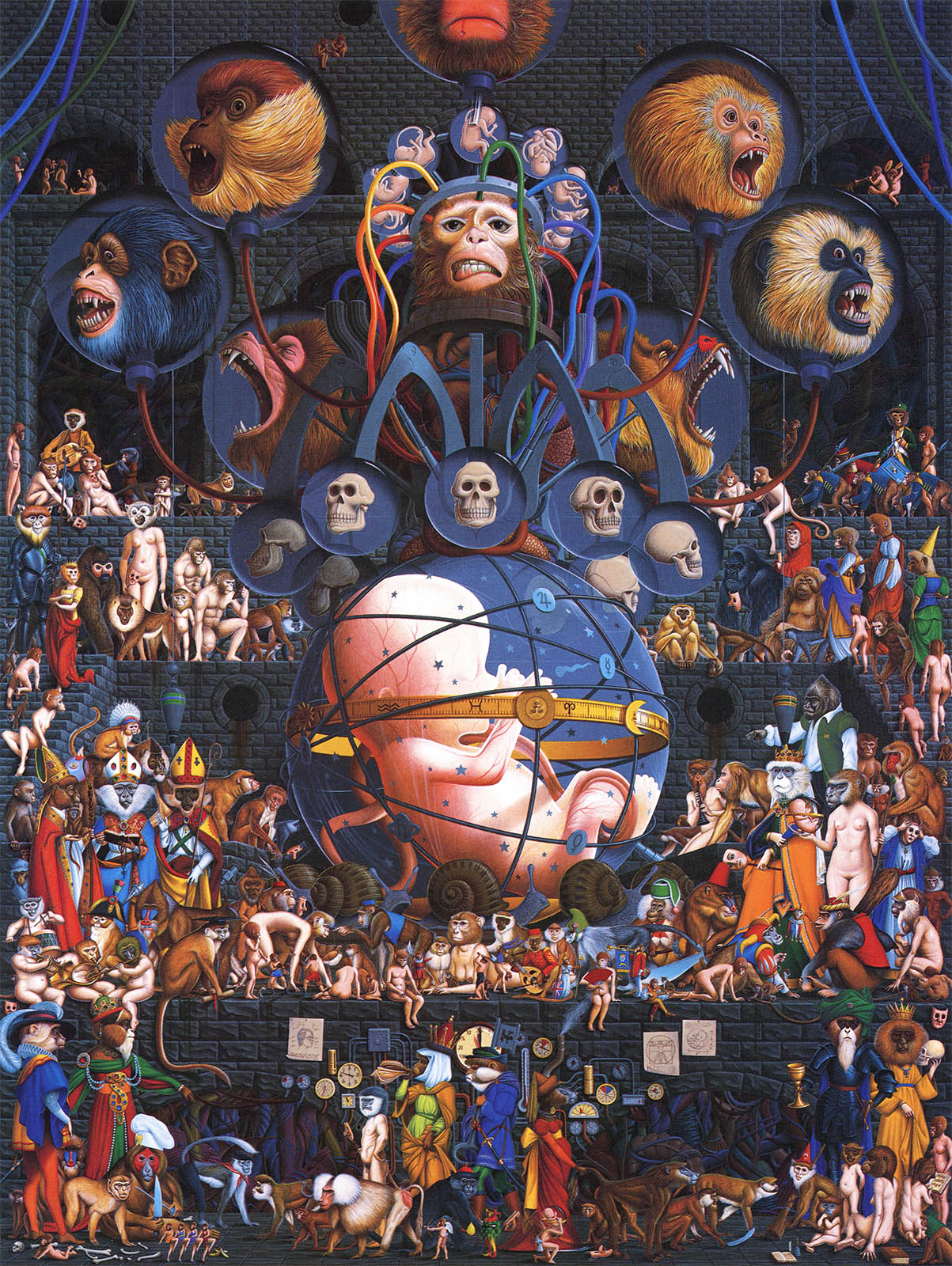
Nativity
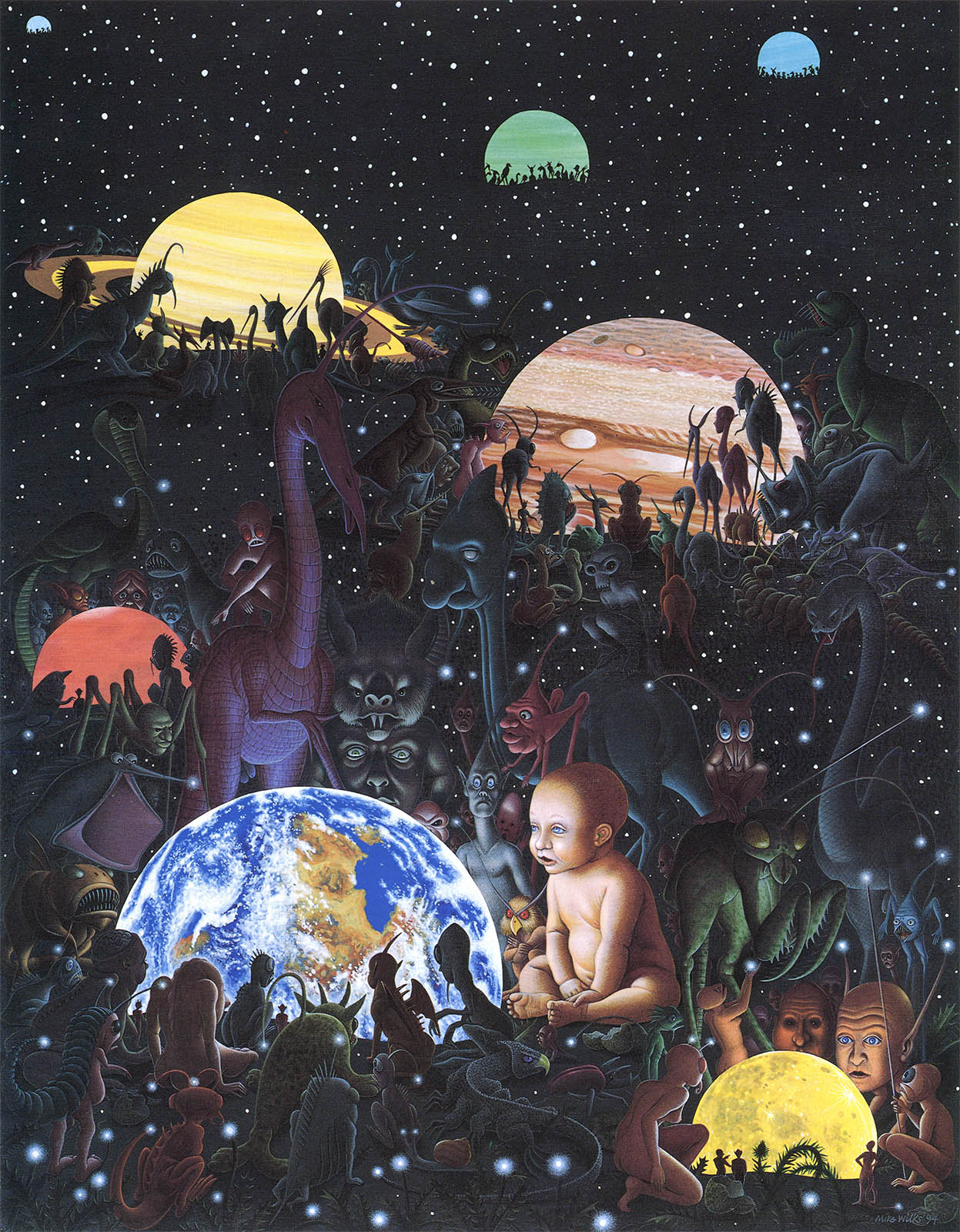
Lucifer’s Garden
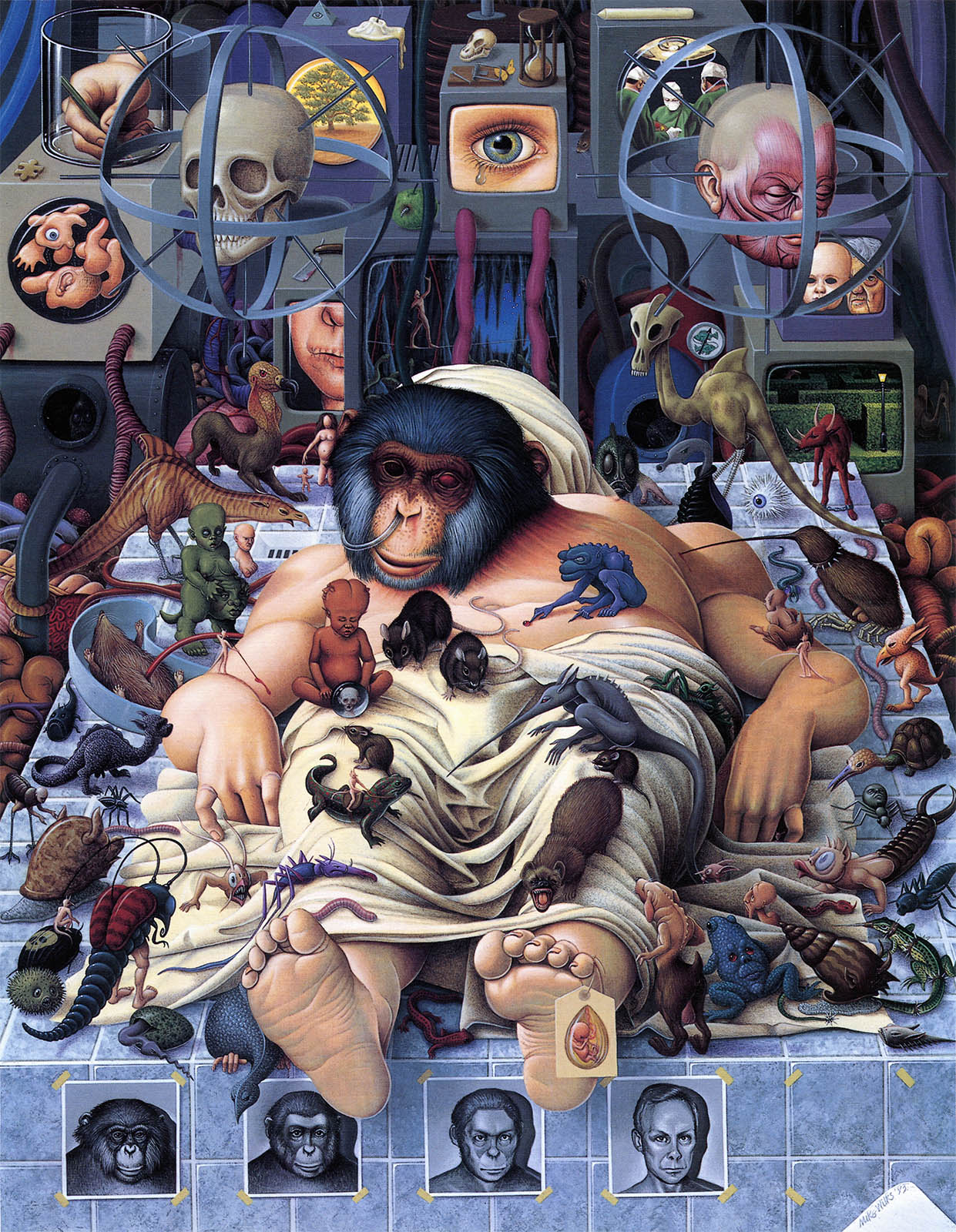
The Glowing Assassins Take Pride in their Work
Sadly, all of Wilks’s picture books are now out of print. As he stated: “there is no enthusiasm in the publishing world of today for this kind of book as they are costly to publish and a lot more bother than the staple diet of today’s lists.” More recently he has turned to writing young adult fiction with his fantasy series Mirrorscape.
1. Aldiss, Brian, Wilks, Mike (illus.). Pile – Petals From Saint Klaed’s Computer. London: Jonathan Cape, 1979, or New York: Holt, Rinehart & Winston, 1979 (WorldCat).
2. Williams, Kit. Masquerade. London: Jonathan Cape, 1979, or New York: Schocken, 1980 (WorldCat). The contest, which involved following the clues in the book to find an 18K golden hare, is perhaps best remembered by Williams ex-girlfriend, Veronica Robertson, giving information to her new boyfriend, who passed on this info to his business partner Dugald Thompson (AKA Ken Thomas) who found and claimed the prize. It would be William’s last puzzle book.
3. Wilks, Mike. The Ultimate Alphabet. London: Pavilion, 1986, or New York; Henry Holt, 1986 (WorldCat). Original printings included the Ultimate Alphabet Workbook. The contest, which closed 1 Apr 1988, was scored as right (+1) minus wrong (–2). Not surprisingly, the winner was the one with the fewest false-positive answers.
4. Wilks, Mike. The Annotated Ultimate Alphabet. London: Pavilion Books, 1988, or New York: Henry Holt, 1988 (WorldCat).
5. Wilks, Mike. The Ultimate Noah’s Ark. London: Michael Joseph, 1994, or New York: Henry Holt, 1994 (WorldCat). The book was also available in Europe on a Philip’s CD-i. The answer to the contest, which closed 1 Feb 1995, was the tamandua or lesser anteater, pictured on the tambourine held by the elephant shrew (bottom, center on the detail above).
6. Wilks, Mike. The Ultimate Spot-the-Difference Book. London: Penguin Studio, 1997, or Metamorphosis – The Ultimate Spot-the-Difference Book. New York: Henry Holt, 1997 (WorldCat).
2 Feb 2010, updated 19 Aug 2015 ‧ Illustration